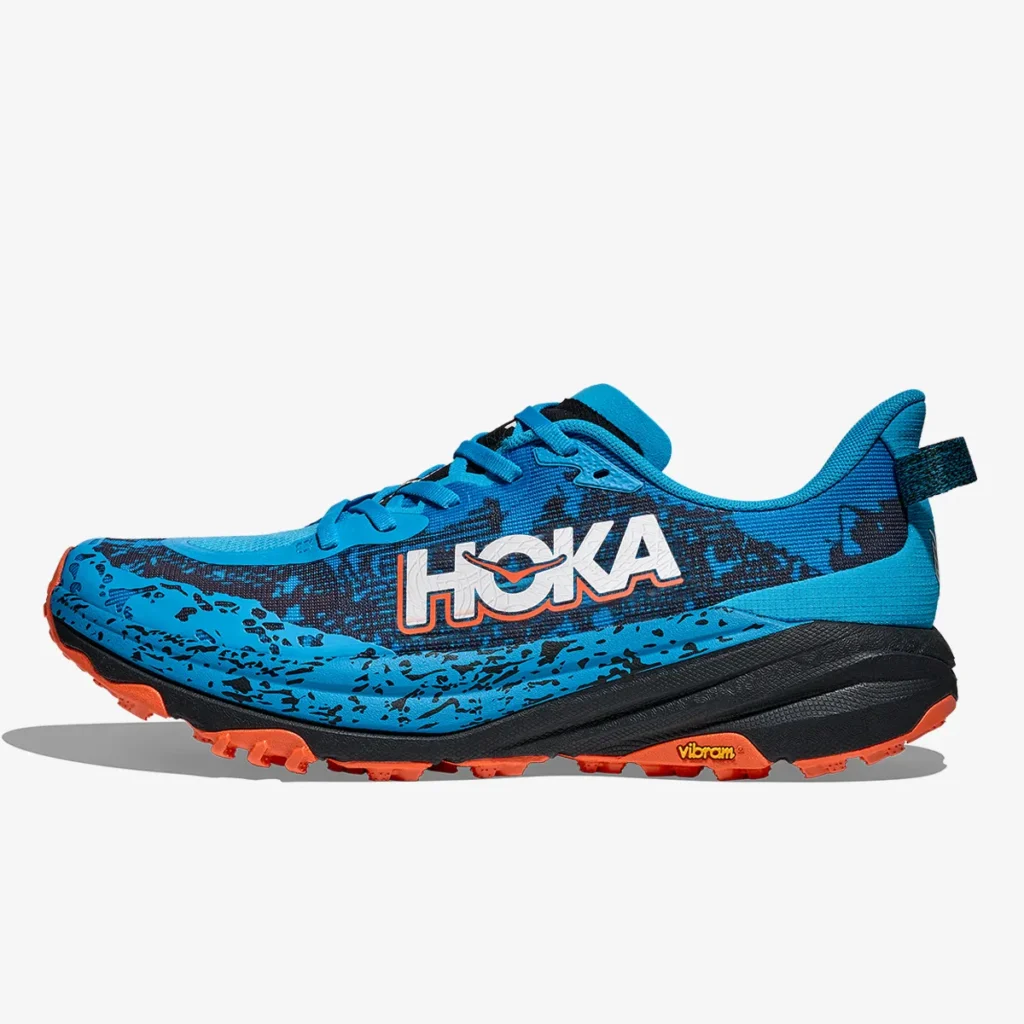
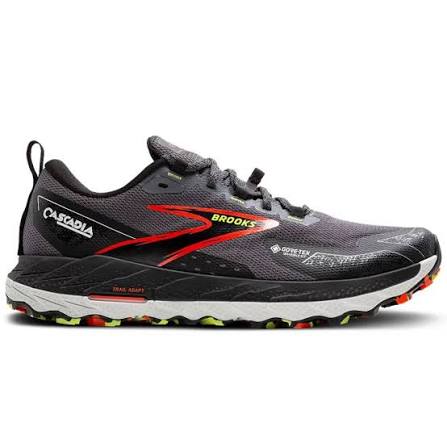
Choosing the right trail running shoe can make a significant difference when running on rocky paths, forest trails, loose gravel, and uneven mountain terrain. Two popular options for off-road runners are the HOKA Speedgoat 6 and the Brooks Cascadia 18.
| Feature | HOKA Speedgoat 6 | Brooks Cascadia 18 |
|---|---|---|
| Best for | Technical trails and challenging terrain | Varied trails and mountain running |
| Cushioning | Responsive and protective | Balanced and comfortable |
| Midsole | Lightweight, responsive foam | DNA LOFT v2 |
| Outsole | Vibram Megagrip with Traction Lugs | TrailTack Green rubber |
| Lug depth | 5 mm | 4.5 mm |
| Heel-to-toe drop | 5 mm | 8 mm |
| Weight | Approx. 278 g | Approx. 315 g |
| Underfoot protection | Protective construction | Integrated rock protection plate |
| Stability | Foot-hugging fit and supportive platform | Trail Adapt System |
| Best running style | Technical and longer trail runs | Everyday trail training and varied terrain |
Check Price on Amazon
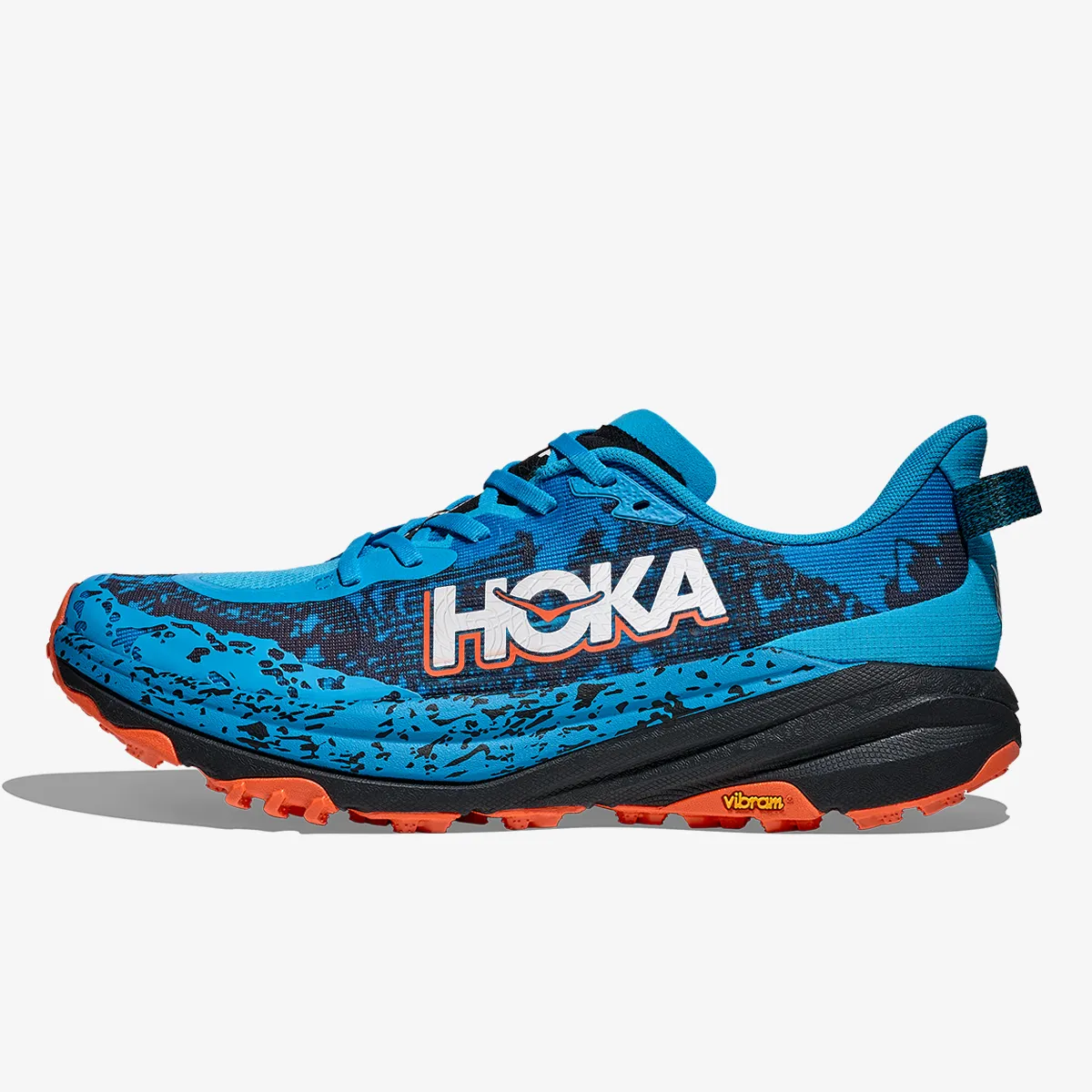

👑 Our Winner: HOKA Speedgoat 6
- Excellent Vibram Megagrip traction.
- More cushioned feel for long trail runs.
- Best for technical trails, wet conditions and ultras
Not sure in your choice? Use our Shoe Finder tool,to make decision.
HOKA Speedgoat 6: Overview
The HOKA Speedgoat 6 is designed for runners who want cushioning, traction, and confidence when tackling demanding off-road routes.
The Speedgoat family has become well known among trail runners because it combines substantial cushioning with an outsole designed for challenging surfaces. The sixth version continues this approach with updated materials, a supportive internal chassis, and revised outsole lugs.
Rather than being a minimalist trail shoe, the Speedgoat 6 aims to protect the foot while maintaining a responsive running feel.
Cushioning and Ride
The Speedgoat 6 uses a lightweight, responsive midsole foam designed to absorb impact while keeping the shoe relatively agile.
This combination can be particularly useful on longer trail runs, where repeated contact with rocks, roots, and uneven ground can place additional demands on the feet.
The cushioning provides protection without making the shoe feel like a dedicated recovery or walking shoe. Its relatively low 5 mm drop also creates a different underfoot geometry from the Brooks Cascadia 18.
Runners accustomed to higher-drop shoes may need time to adjust. The drop alone does not determine whether a shoe is comfortable, but it can influence how the shoe feels during transitions.
Grip and Outsole
One of the strongest features of the Speedgoat 6 is its Vibram Megagrip outsole with Traction Lugs.
The outsole uses 5 mm lugs designed to improve traction on loose dirt, rocky trails, and other challenging outdoor surfaces.
This setup makes the shoe an attractive option for runners who regularly encounter steep sections, loose gravel, and uneven terrain.
The outsole is designed to provide reliable grip across a variety of trail conditions. However, no shoe can eliminate the risk of slipping on wet roots, smooth rocks, or muddy surfaces.
Fit and Upper
The Speedgoat 6 features a lightweight woven upper, an internal support chassis, a gusseted tongue, and a protective toe bumper.
These elements are intended to help secure the foot, reduce debris entering the shoe, and protect the toes from occasional contact with rocks and other obstacles.
Fit is particularly important on technical descents, when the foot can slide forward inside the shoe. Runners should make sure there is enough toe room without excessive movement around the heel.
The standard version may not suit every foot shape, so trying the shoe on before purchasing is worthwhile.
Brooks Cascadia 18: Overview
The Brooks Cascadia 18 is a versatile trail running shoe designed for runners who want cushioning, protection, and a stable feel across changing terrain.
Rather than focusing exclusively on aggressive traction, the Cascadia combines a balanced midsole with an adaptable stability system and a protective construction.
This makes it an interesting option for recreational trail runners, mountain runners, and anyone who regularly encounters a mixture of dirt, gravel, and rocky paths.
Cushioning and Ride
The Cascadia 18 uses DNA LOFT v2 cushioning, which is designed to provide a comfortable, balanced ride on uneven surfaces.
Compared with the Speedgoat 6, the Cascadia has an 8 mm heel-to-toe drop. This may feel more familiar to runners who usually wear traditional road running shoes with a higher drop.
The cushioning is intended to deliver comfort without sacrificing the controlled feel needed for trail running.
Although the Cascadia is not a maximal-cushioning shoe, its midsole provides cushioning for everyday trail training and longer outdoor runs.
The most comfortable option will depend on personal preference. Some runners prefer the Speedgoat’s responsive feel, while others may appreciate the Cascadia’s balanced ride.
Grip and Outsole
The Brooks Cascadia 18 features a TrailTack Green rubber outsole with 4.5 mm lugs.
The outsole is designed to provide traction on both wet and dry surfaces, making the shoe suitable for varied trail conditions.
Its tread is intended to handle a mixture of dirt, gravel, and uneven paths rather than serving only one specific type of terrain.
The Speedgoat 6 has deeper 5 mm lugs and a Vibram Megagrip outsole, giving it a clear specification advantage for runners specifically seeking that outsole system.
However, lug depth alone does not determine real-world traction. Rubber compound, lug arrangement, terrain, and running technique all contribute to grip.
Stability and Underfoot Protection
One of the defining features of the Cascadia 18 is the Brooks Trail Adapt System.
This system combines the midsole, an integrated protective plate, and zonal outsole pods to help the shoe adapt to uneven ground.
The articulated rock protection plate is designed to reduce discomfort from sharp rocks and obstacles underfoot. A protective toe cap and reinforced upper areas also help protect the shoe during demanding outdoor use.
These features make the Cascadia particularly appealing to runners who value a controlled, protective platform.
The shoe is not a substitute for proper technique on technical terrain, but its construction is designed to support a confident trail-running experience.
Fit and Upper
The Cascadia 18 features a breathable mesh upper with protective overlays in high-wear areas.
The upper is designed to balance breathability, durability, and protection. It also dries quickly, which can be useful during outdoor training in changeable conditions.
As with the HOKA, fit should be a priority. A secure heel, comfortable midfoot, and sufficient toe room can make a significant difference on long runs and steep descents.
he HOKA Speedgoat 6 and Brooks Cascadia 18 are both capable trail running shoes, but they prioritize different features.
The HOKA Speedgoat 6 is the stronger choice for runners who prioritize aggressive traction, a lighter shoe, and responsive cushioning. Its Vibram Megagrip outsole and 5 mm lugs make it particularly appealing for technical trails and demanding outdoor routes.
The Brooks Cascadia 18 is an excellent alternative for runners who value balanced cushioning, an adaptable stability system, and underfoot protection. Its Trail Adapt System and rock protection plate make it a practical option for varied trail training.
What is your choice?
Tell us in comment.
Leave a Reply